










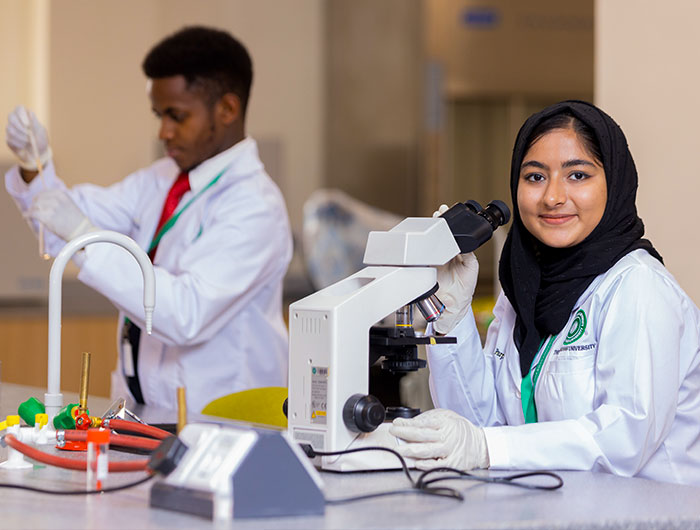
Are you searching for the Aga Khan University Bachelor of Medicine & Surgery (MBChB) fee structure for 2025? This detailed guide provides a complete breakdown of tuition fees, additional costs, financial aid options, and unique insights into the program’s value. Located in Nairobi, Kenya, Aga Khan University (AKU) offers a world-class, six-year MBChB program designed to produce skilled, compassionate doctors. This article dives into the 2025-2026 academic year costs, admission requirements, payment plans, and real-world experiences to help you make an informed decision about pursuing this prestigious medical degree.
Why Choose Aga Khan University’s MBChB Program?
The Aga Khan University Medical College is renowned for its rigorous curriculum, integrating medical sciences, humanities, and hands-on clinical training. The six-year MBChB program emphasizes patient-centered care, research, and global healthcare relevance, preparing graduates for diverse medical careers. With state-of-the-art facilities along 3rd Parklands Avenue, Nairobi, AKU stands out as a leader in East African medical education. Its merit-based admissions ensure equal opportunities, making it a top choice for aspiring doctors.
“AKU’s MBChB program transformed my perspective on medicine. The blend of clinical exposure and ethical training prepared me to handle real-world challenges with confidence.” – Dr. Sarah Wanjiku, AKU MBChB Graduate, 2023.
Aga Khan University MBChB Fee Structure for 2025-2026: Detailed Breakdown
Understanding the Aga Khan University MBChB fee structure is crucial for prospective students and their families. Below is a comprehensive two-column table outlining the 2025-2026 academic year costs for the MBChB program in Nairobi, Kenya. These figures are based on the latest available data and reflect costs for Kenyan students. International students may face slightly different rates, particularly for hostel accommodations.
| Fee Type | Amount (KES) |
|---|---|
| Application Fee | 3,500 (One-time) |
| Quality Assurance Fee | 1,200 (One-time) |
| Graduation Fee | 5,500 (One-time, 50% refundable) |
| Caution Fee | 5,500 (One-time, refundable) |
| Student Health Fees | 30,000 (Annual) |
| Student Activity Fee | 4,500 (Annual) |
| Physical Examination Fee | 20,000 (One-time) |
| Student Immunization Fee | 10,000 (One-time) |
| Tuition Fee (Per Trimester) | 431,594 – 525,000 (Varies by accommodation) |
| Hostel Fee (Optional) | 40,000 (Monthly, on-campus) |
| Air-Conditioning Charge | 16,000 (Monthly, for hostel residents) |
Note: Tuition fees vary depending on whether students opt for on-campus housing. The range of KES 431,594–525,000 per trimester accounts for accommodation choices. International students should check AKU’s official website for USD-based fees.
Key Insights on Fees
- Trimester-Based Structure: The MBChB program operates on a trimester system, with three terms per academic year. This allows for flexible payment scheduling but requires careful financial planning.
- Refundable Fees: The graduation fee (50%) and caution fee are refundable upon successful program completion and clearance, easing the financial burden slightly.
- Additional Costs: Beyond tuition, students should budget for textbooks, medical equipment, and personal expenses, which can add approximately KES 50,000–100,000 annually.
Financial Aid and Payment Plans for MBChB Students
The Aga Khan University recognizes the significant investment required for medical education and offers robust financial aid options to support students. These include:
- Merit-Based Scholarships: Awarded to top-performing students based on academic excellence and entrance exam results.
- Need-Based Bursaries: Available for students demonstrating financial hardship, covering up to 50% of tuition fees in some cases.
- Flexible Payment Plans: Students can pay fees in installments per trimester, reducing the upfront financial burden.
- External Sponsorships: AKU partners with organizations like the Higher Education Loans Board (HELB) in Kenya to provide loans for eligible students.
“The financial aid office at AKU was a lifesaver. Their bursary program allowed me to focus on my studies without worrying about the full cost of tuition.” – James Otieno, MBChB Student, Class of 2026.
For detailed application processes, visit AKU’s financial aid page.
Admission Requirements for the MBChB Program in 2025
To enroll in the Aga Khan University MBChB program, applicants must meet stringent academic and procedural requirements. Below is a summary of the 2025 admission criteria:
- KCSE Holders: Minimum C+ mean grade, with a B plain in Biology, Chemistry, Physics or Mathematics, and English or Kiswahili.
- A-Level Certificate Holders: Principal passes of B in Biology, Chemistry, and either Mathematics or Physics.
- International Baccalaureate (IB): Grade 7 and above in Biology, Chemistry, Mathematics, or Physics.
- Diploma in Medical Sciences: A C+ mean grade in KCSE with a credit pass from a recognized medical training institution.
- Undergraduate Degree Holders: A degree in Biological Sciences or equivalent from a recognized university.
Applicants must also pass a written entrance test and an interview, emphasizing problem-solving and ethical reasoning. Learn more about the process on AKU’s admissions page.
Unique Insights: The Value of AKU’s MBChB Program
Real-World Clinical Exposure
Unlike many medical programs, AKU integrates clinical training from the first year. Students gain hands-on experience at the Aga Khan University Hospital, a leading healthcare facility in Nairobi. This exposure builds confidence and practical skills early on.
“My first-year clinical rotation at AKU Hospital was eye-opening. I learned to interact with patients and apply theoretical knowledge in real-time.” – Amina Hassan, MBChB Student, Class of 2027.
Research Opportunities
AKU emphasizes research and innovation, encouraging students to tackle global healthcare challenges. The university’s partnerships with institutions like the World Health Organization (WHO) provide unique research opportunities, setting graduates apart in competitive fields.
Global Recognition
Graduates of AKU’s MBChB program are recognized worldwide, with many securing residencies in the United States, United Kingdom, and Canada. The program’s alignment with international standards ensures graduates are well-prepared for global medical practice.
Case Study: A Student’s Journey Through AKU’s MBChB Program
Meet Esther Mwangi, a 2025 MBChB enrollee from Nairobi. Coming from a middle-class family, Esther was initially daunted by the MBChB fee structure. However, AKU’s financial aid office guided her through the bursary application process, securing a 30% tuition reduction. Esther also opted for off-campus housing to lower costs, paying KES 431,594 per trimester instead of the higher hostel-inclusive rate.
During her first trimester, Esther appreciated the problem-based learning (PBL) approach, which encouraged critical thinking over rote memorization. Her clinical rotations at Aga Khan University Hospital gave her early exposure to patient care, while mentorship from faculty helped her navigate the demanding curriculum. Esther’s experience highlights how AKU balances academic rigor with financial and academic support.
Comparing AKU’s MBChB Fees with Other Kenyan Medical Schools
To provide perspective, here’s how AKU’s MBChB fees compare with other top Kenyan medical schools for 2025:
| Institution | Annual Tuition (KES) |
|---|---|
| Aga Khan University | 1,294,782 – 1,575,000 (Trimester-based) |
| University of Nairobi | 650,000 – 800,000 |
| Moi University | 600,000 – 750,000 |
| Kenyatta University | 700,000 – 850,000 |
While AKU’s fees are higher, the world-class facilities, global accreditation, and early clinical exposure justify the cost. Graduates often secure competitive positions, making the investment worthwhile.
Tips for Managing MBChB Costs at AKU
- Apply Early for Financial Aid: Submit applications by March 2025 to maximize scholarship opportunities.
- Explore External Funding: Organizations like HELB and Mastercard Foundation offer loans and grants for medical students.
- Budget for Additional Costs: Allocate funds for textbooks, medical kits, and living expenses.
- Consider Off-Campus Housing: Save up to KES 672,000 annually by opting for private accommodation near AKU.
Updates for 2025: What’s New?
- Increased Financial Aid Budget: AKU has boosted its financial aid fund by 15% for 2025, supporting more students.
- Enhanced Digital Learning: The MBChB program now includes virtual simulation labs, enhancing clinical training.
- Sustainability Initiatives: AKU is introducing eco-friendly campus practices, reducing operational costs that may stabilize future fees.
How to Apply for the MBChB Program in 2025
The application process is straightforward but competitive:
- Submit Online Application: Complete the form on AKU’s admissions portal with a KES 3,500 application fee.
- Take the Entrance Exam: A written test assessing critical thinking and medical knowledge.
- Attend an Interview: Shortlisted candidates undergo a panel interview.
- Await Admission Decision: Results are announced by June 2025.
For updates, follow AKU on Twitter and Instagram.
Conclusion: Is AKU’s MBChB Program Worth the Investment?
The Aga Khan University MBChB program is a premium choice for aspiring doctors, offering unparalleled training, global recognition, and robust financial support. While the 2025-2026 fee structure ranges from KES 431,594–525,000 per trimester, the program’s value lies in its world-class facilities, early clinical exposure, and research opportunities. By leveraging scholarships, bursaries, and payment plans, students can make this investment manageable. For more details, visit AKU’s official website or explore Wikipedia’s page on Aga Khan University for background information.
This guide aims to empower you with the knowledge to pursue your medical career at AKU. Start planning today to join the next generation of healthcare leaders!