










Google Confirms Completion of May Core Algorithm Update Rollout. After a tumultuous 11-day rollout, Google has officially confirmed the completion of its May Core Update. The update, which began on May 21 at 8:40 AM PDT, marked a significant shift in the company’s search engine optimization (SEO) landscape. As the tech giant continues to evolve its AI-powered search features, the May Core Update has sparked intense interest among SEO practitioners and digital marketers worldwide.
Google Confirms Completion of May Core Update Rollout
Google has confirmed the completion of its May Core Update rollout. The company announced the update’s completion on June 2 on the Search Status Dashboard. This marks the end of an 11-day and 21-hour rollout that began on May 21 at 8:40 AM PDT.
The May Core Update‘s completion was preceded by a volatile rollout, with third-party tracking tools showing elevated volatility at several points during the update. The update’s duration was close to that of the March Core Update, which finished in 12 days. Google’s Search Status Dashboard provides a platform for the company to communicate updates and changes to its algorithm.
The completion of the May Core Update does not mean that every movement during the rollout had the same cause. Ranking data showed movement across multiple points in the rollout, not just at the start and finish. This makes single-day comparisons risky, and Google advises waiting at least a full week after completion before analyzing Search Console data.
Timeline of the May Core Update Rollout


Google’s May Core Update rollout began on May 21 at 8:40 AM PDT and lasted for 11 days and 21 hours. The update concluded on June 2 at 5:40 AM PDT, as confirmed by Google on the Search Status Dashboard. This duration is close to the March core update, which finished in 12 days.
The rollout was marked by elevated volatility at several points, as tracked by third-party tools. This volatility was observed across multiple points in the rollout, not just at the start and finish. As a result, single-day comparisons are considered risky when analyzing the impact of the update.
Google’s documentation advises waiting at least a full week after the update’s completion before analyzing Search Console data. This means the earliest clean comparison window is around June 9.
What This Means for Search Engine Optimization (SEO)

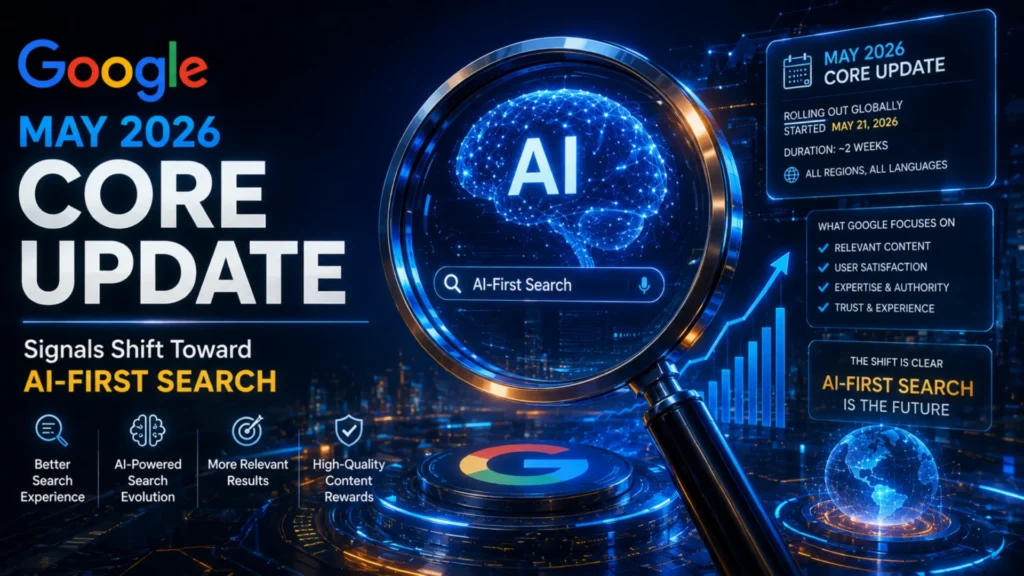
The completion of Google’s May Core Update is expected to have a significant impact on search engine rankings, with some practitioners describing it as more noticeable than the March update. The update lasted for 11 days and 21 hours, with third-party tracking tools showing elevated volatility at several points during the rollout. This increased volatility means that website traffic may have fluctuated significantly during this period, making it challenging for webmasters to analyze the impact of the update.
To adapt to the update, webmasters should wait at least a full week after completion before analyzing Search Console data, as recommended by Google’s core update documentation. This allows for a clean comparison window, which in this case will be around June 9. During this time, webmasters can assess the changes in their website’s traffic and rankings to determine the best course of action. By doing so, they can make informed decisions to optimize their website’s performance and improve its visibility in search engine results.
As the update’s impact is still being assessed, webmasters should remain vigilant and monitor their website’s performance closely. They should also be prepared to adjust their SEO strategies accordingly to ensure their website remains competitive in the ever-changing search engine landscape.
Google’s Search Status Dashboard and Communication
Google confirmed the completion of its May Core Update on June 2, posting the update on its Search Status Dashboard. The dashboard serves as a crucial communication channel for the company to inform users about the status of its algorithm updates. By utilizing this dashboard, Google provides transparency into the update process, allowing users to stay informed about any changes or issues that may arise.
The Search Status Dashboard is an essential tool for users to track the progress of Google’s updates. During the May Core Update, the dashboard displayed the update’s start date and time, as well as its completion date and time. This information enabled users to monitor the update’s rollout and understand its impact on search engine rankings. By providing this information, Google demonstrates its commitment to transparency and open communication with its users.
The Search Status Dashboard has become an integral part of Google’s update process, offering users a centralized location to access information about algorithm updates. By leveraging this dashboard, Google can effectively communicate with its users, ensuring they are aware of any changes or issues that may affect their search engine rankings.
Expert Analysis and Market Reaction
Industry experts have been observing the impact of Google’s May Core Update, with some describing it as more noticeable than the March update. Marie Haynes, founder of Marie Haynes Consulting Inc., noted that the timing of the update coincided with Google’s announcement of changes to its AI Search features at I/O. The update saw elevated volatility at several points during the rollout, with some practitioners reporting impact “across verticals and countries” by the first weekend.
Glenn Gabe, SEO consultant at G-Squared Interactive, observed on social media that the May 2026 core update has been “powerful so far… much more like a typical core update.” Lily Ray, VP of SEO Strategy and Research at Amsive, also reported on weekend movement, noting that “a handful of sites started seeing big surges over the weekend with the core update.” These observations suggest that the update has had a significant impact on search engine rankings.
As the update is now complete, webmasters are left to analyze the impact on their websites. Google’s core update documentation advises waiting at least a full week after completion before analyzing Search Console data, then comparing that week with the week before the rollout began. This means that the earliest clean comparison window is around June 9, allowing webmasters to gain a clearer understanding of the update’s long-term implications.
Conclusion and Next Steps for Webmasters
The May core update is now complete, marking the end of a volatile rollout that lasted 11 days and 21 hours. The update started on May 21 at 8:40 AM PDT and finished on June 2 at 5:40 AM PDT, according to the Search Status Dashboard. This duration is close to the March core update, which finished in 12 days.
Webmasters should take note that the update may be hard to read due to movement across multiple points in the rollout, not just at the start and finish. This means that a site that moved on May 24 may need a different read than one that moved on June 2. To get a clear picture, Google recommends waiting at least a full week after completion before analyzing Search Console data, then comparing that week with the week before the rollout began. This puts the earliest clean comparison window at around June 9.
To adapt to the update, webmasters should be prepared for potential changes to search engine rankings and impact on website traffic. It’s recommended to wait at least a week after the update completion before analyzing Search Console data. This will help to get a clear picture of the update’s impact and make informed decisions about future SEO strategies.