









Planning a Maasai Mara safari? One of the first decisions you’ll face is whether to drive or fly from Nairobi to this iconic Kenyan wildlife reserve. Flying is the fastest and most comfortable option, taking just 45 minutes from Nairobi’s Wilson Airport, but it’s pricier, with tickets averaging $250-$350 round trip. Driving, while more budget-friendly at $100-$200 per person, takes 5-7 hours and includes bumpy roads. This guide dives into the pros and cons of each, enriched with personal insights, updated 2025 data, and expert tips to optimize your Maasai Mara adventure.
Why Choose Maasai Mara for Your Safari?
The Maasai Mara National Reserve, spanning 1,510 square kilometers, is Kenya’s premier safari destination, famed for the Great Migration (July to November), where over 1.5 million wildebeest and zebras traverse the plains. Home to the Big Five (lion, leopard, elephant, buffalo, and rhino), it offers unparalleled wildlife viewing. My first visit in 2023 left me awestruck as I watched a cheetah sprint across the savannah, a sight that no photo can fully capture. Whether you’re a first-time safari-goer or a seasoned traveler, the Mara’s open grasslands and rich biodiversity make it a must-visit.
Key Considerations for Your Maasai Mara Journey
Before deciding on driving or flying, consider your budget, time constraints, and travel preferences. Below, we explore both options in detail, supported by a comprehensive comparison table, real-world examples, and insider tips to ensure a memorable safari experience.
Driving to Maasai Mara: A Scenic Road Adventure
Driving from Nairobi to the Maasai Mara is a 5-7 hour journey covering 225-280 kilometers, depending on the route and entry gate (e.g., Sekenani or Talek). The route via Narok Town is the most popular, offering a mix of paved highways and unpaved, bumpy stretches. In 2025, road conditions have improved significantly, with the Nairobi-Narok highway now mostly tarmac, though the final 50-70 km remain rough, especially during the rainy season (March-May).
Pros of Driving to Maasai Mara
- Cost-Effective for Groups: Driving costs $100-$200 per person for a guided safari, making it nearly half the price of flying. For groups, splitting a 4×4 Land Cruiser rental reduces costs further.
- Scenic Countryside Views: The drive offers stunning vistas of the Great Rift Valley, tea plantations, and Maasai villages. Stopping at the Rift Valley viewpoint for photos is a highlight.
- Cultural Immersion: You’ll interact with Kenyan locals at roadside curio shops or in Narok, experiencing their warmth and craftsmanship. My stop at a Maasai market in 2023 introduced me to vibrant beadwork and stories from local artisans.
- Flexible Itinerary: Driving allows stops at attractions like Lake Naivasha or Narok Town, adding variety to your trip.
Cons of Driving to Maasai Mara
- Long Travel Time: The 5-7 hour drive can be exhausting, especially with 2-3 hours of bumpy roads from Narok to the reserve. If you’re prone to motion sickness, this can be challenging.
- Rough Terrain: The final stretch is dusty and potholed, requiring a 4×4 vehicle. In 2024, a colleague’s van got a puncture, delaying their arrival by an hour.
- Potential Delays: Rainy season (March-May) can make roads muddy, and occasional protests near Mai Mahiu may cause delays, as reported on Tripadvisor.
- Fatigue Before Safari: Arriving tired may reduce your energy for game drives, especially if you start immediately.
Traveler Quote: “The drive was an adventure in itself! We stopped at a Maasai village and learned about their cattle herding traditions. It made the journey feel like part of the safari.” – Sarah M., UK Traveler, 2024.
Flying to Maasai Mara: Speed and Scenic Splendor
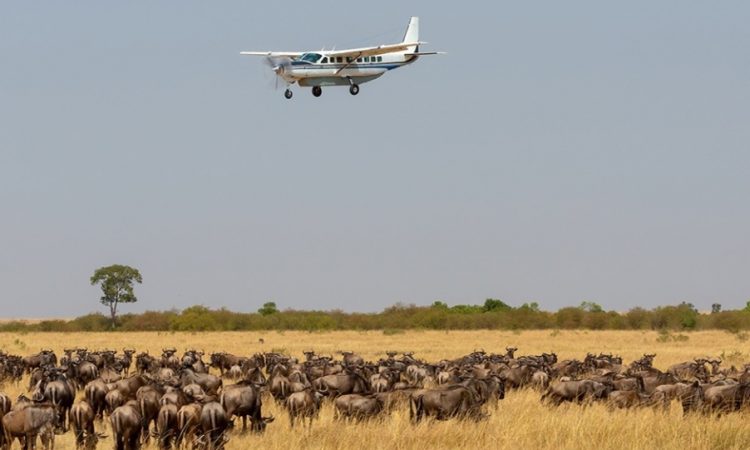
Flying from Nairobi’s Wilson Airport to one of the Mara’s nine airstrips (e.g., Ol Kiombo, Keekorok, or Serena) takes 45-60 minutes. Airlines like SafariLink, AirKenya, and Governors Aviation operate daily flights, with round-trip tickets costing $250-$350. Upon landing, a safari vehicle from your lodge often starts your game drive immediately, maximizing wildlife viewing time.
Pros of Flying to Maasai Mara
- Time-Saving: A 45-minute flight versus a 6-hour drive means more time for game drives or relaxation. In 2023, I flew to Mara North Airstrip and was spotting zebras within an hour of landing.
- Comfortable Travel: Avoid bumpy roads and enjoy a smooth flight in small propeller planes (e.g., Cessna Caravans). This is ideal for families or older travelers.
- Breathtaking Aerial Views: The flight offers stunning views of the Great Rift Valley, Maasai bomas, and sometimes wildlife like elephants. Keep your camera ready, as advised by SafariBookings.
- Direct Coastal Connections: You can fly directly from Mombasa or Diani to the Mara in 1 hour, compared to a 12-hour round-trip drive via Nairobi.
Cons of Flying to Maasai Mara
- Higher Costs: Flights cost $250-$350 round trip, significantly more than driving. Additional fees may apply for excess luggage.
- Luggage Restrictions: Most flights limit baggage to 15kg in soft bags, which can be challenging for overpackers or photographers with gear.
- Limited Interaction with Locals: Flying bypasses roadside cultural experiences, such as meeting Maasai artisans or visiting curio shops.
- Fixed Schedules: Flights operate on set times, reducing flexibility compared to driving.
Expert Tip: “Book your flight to the airstrip closest to your lodge, like Ol Kiombo for Mara Intrepids or Musiara for Governors’ Camp, to minimize transfer time.” – John K., Safari Guide, 2025.
Driving vs. Flying: A Comprehensive Comparison
To help you decide, here’s a detailed comparison of driving vs. flying to the Maasai Mara, based on 2025 data and personal observations:
| Aspect | Driving | Flying |
|---|---|---|
| Travel Time | 5-7 hours depending on route and conditions | 45-60 minutes from Wilson Airport |
| Cost | $100-$200 per person for guided safari; cheaper for groups | $250-$350 round trip per person |
| Comfort | Bumpy, especially last 50-70 km; prone to dust and motion sickness | Smooth, comfortable; ideal for families and older travelers |
| Scenic Views | Great Rift Valley, tea plantations, Maasai villages | Aerial views of Rift Valley, savannahs, and wildlife |
| Cultural Interaction | High; stops at curio shops and villages allow local engagement | Low; limited to lodge-based cultural visits |
| Flexibility | High; stopovers at Lake Naivasha or Narok possible | Low; fixed flight schedules |
| Luggage Limits | Flexible; no strict weight restrictions | 15kg max, soft bags only |
| Environmental Impact | Higher fuel consumption; road wear impacts local ecosystems | Higher carbon footprint due to small aircraft |
| Best For | Budget travelers, adventure seekers, cultural enthusiasts | Time-constrained travelers, luxury seekers, families |
Insider Tips for Your Maasai Mara Journey
- Combine Driving and Flying: Many travelers, including myself in 2024, opt to drive to the Mara for the scenic experience and fly back to save time. Coordinate with your tour operator, like GoKenyaSafari, for seamless logistics.
- Best Time to Visit: July to November is ideal for the Great Migration, but January to March offers fewer crowds and excellent big cat sightings, as noted by Fly ALS.
- Vehicle Choice: For driving, insist on a 4×4 Land Cruiser over a minivan for better handling on rough roads. In 2023, my group’s Land Cruiser navigated muddy patches with ease, unlike a minivan that got stuck nearby.
- Luggage for Flights: Pack light with soft duffel bags. Most camps, like Sarova Mara, offer laundry services, reducing the need for extra clothes.
- Book Early: Flight schedules and lodge availability fill up fast during peak season (July-November). Secure your spot at least 3-6 months in advance.
- Sustainability Note: Driving has a lower carbon footprint for groups, but flying’s convenience comes at a higher environmental cost. Consider offsetting your carbon emissions through programs like those offered by Kenya Airways.
Case Study: A Family’s Maasai Mara Experience
In 2024, the Thompson family from Canada faced the drive vs. fly dilemma for their 4-day Mara safari. With two children (ages 8 and 12), they chose to fly to Keekorok Airstrip for comfort and time efficiency. The 45-minute flight allowed them to start their first game drive by noon, spotting a pride of lions within hours. However, they regretted missing the Rift Valley views and planned to drive back to Nairobi, stopping at Lake Naivasha for a boat tour. Their total cost was $1,200 for flights (four people) versus $600 for a guided drive, but they valued the extra safari time.
Unique Angle: The Hybrid Approach
For a balanced experience, consider a hybrid approach: fly to the Mara to maximize safari time and drive back to soak in Kenya’s countryside. This strategy, popular among 2025 travelers, combines the speed of flying with the cultural richness of driving. For example, my 2024 return drive included a stop at a Maasai manyatta, where I learned about their sustainable cattle herding practices, a perspective absent from aerial travel.
Conclusion: Which Option Suits You Best?
Choosing between driving or flying to the Maasai Mara depends on your priorities. If time and comfort are key, flying is the best choice, offering quick access and stunning aerial views. If budget and cultural immersion matter, driving provides a cost-effective adventure with unforgettable scenery. For the ultimate experience, try a hybrid approach to enjoy both worlds. Whichever you choose, the Maasai Mara’s wildlife spectacle awaits, promising memories that last a lifetime. Share your plans or experiences on Twitter at @MasaiMaraTravel or check Wikipedia for more on this iconic reserve.