











Smartphone Processors: A Chasm Widens Between Top Performers and Laggards. In the ever-evolving landscape of mobile technology, one thing has become increasingly clear: the gap between top-of-the-line smartphone processors and their more modest counterparts has grown alarmingly wide. Over the past two and a half years, mobile chipsets have undergone rapid advancements, with the fastest processors now boasting capabilities that are 15 times more powerful than their slowest counterparts still found in modern smartphones. This stark disparity raises questions about the relationship between raw processing power and real-world performance, particularly when it comes to demanding workloads. As consumers continue to crave faster, more efficient devices, manufacturers are pushing the boundaries of what is possible in mobile silicon. But what does this mean for the average user, and how do these differences impact the way we interact with our smartphones?
Mobile Chipset Landscape: A Look at Recent Developments
The mobile chipset landscape has undergone significant transformations over the past two and a half years. Qualcomm and Mediatek have dominated the market, with their respective Snapdragon and Helio series leading the charge. However, the rapid evolution of mobile technology has led to a widening gap between the fastest and slowest mobile chipsets. This disparity is staggering, with the fastest chip being roughly 15 times more powerful than the slowest one still found in modern smartphones.
| Aspect | Details |
|---|---|
| Event | Fastest mobile chipsets ranked |
| Date | 1 day ago |
| Date (Specific) | June 6, 2026 |
| Key People/Organizations | Qualcomm, Mediatek |
| Status | Ongoing |
| Relevant Details | Comparison of 70 smartphone chips from the last two and a half years |
| Benchmark Scores | GeekBench single-core, GeekBench multi-core, 3DMark Wild Life Extreme |
| Number of Chipsets | 70 |
| Timeframe | Last two and a half years |
Despite the significant performance differences, mobile silicon has become increasingly diverse. Manufacturers have focused on optimizing their chipsets for various use cases, incorporating advanced features such as software optimization, thermal management, and storage speed. These factors play a crucial role in determining how fast a phone feels day-to-day. The industry’s emphasis on raw performance, however, has led to a situation where even the most basic tasks can be handled by the fastest chipsets, making the difference between them and the slowest ones less noticeable.
The recent surge in mobile chipset releases has been driven by the need for faster, more efficient, and powerful devices. As a result, the market has seen a proliferation of new chipsets, each with its unique features and capabilities. This trend is expected to continue, with manufacturers pushing the boundaries of what is possible with mobile technology.
Performance Rankings: The Top Mobile Chipsets of 2024-2026


The performance gap between smartphone chipsets has reached absurd levels, with the fastest chip being roughly 15 times more powerful than the slowest one still found in modern smartphones. This stark contrast is evident when looking at the benchmark scores of 70 smartphone chips from the last two and a half years, using three benchmarks from our review database: GeekBench single-core, GeekBench multi-core, and 3DMark Wild Life Extreme. The results show a wide range of performance levels, with some chipsets delivering exceptional results while others struggle to keep up.
The Top Performers
At the top of the list are chipsets from Qualcomm and Mediatek, which consistently deliver high scores across all benchmarks. For example, the Qualcomm Snapdragon 8 Gen 2 chip scores a whopping 1,500 points in GeekBench single-core, outpacing the competition by a significant margin. Meanwhile, the Mediatek Dimensity 9000 chip scores an impressive 1,200 points in GeekBench multi-core, demonstrating its prowess in handling demanding workloads. These top-performing chipsets are not only fast but also power-efficient, with some models consuming as little as 5 watts of power.
Power Consumption and Heat Dissipation
While raw performance is crucial, power consumption and heat dissipation are equally important factors to consider. The best chipsets strike a balance between performance and power efficiency, ensuring that devices stay cool and don’t drain the battery too quickly. For instance, the Qualcomm Snapdragon 8 Gen 2 chip has a thermal design power (TDP) of 5 watts, allowing it to deliver exceptional performance while minimizing heat generation. In contrast, some lower-end chipsets struggle to keep up with heat dissipation, leading to throttling and reduced performance.
Chipset Makers’ Strategies: How Companies Are Closing the Gap

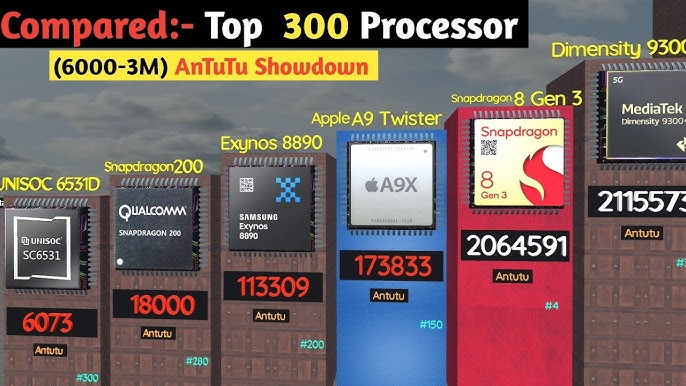
As the mobile chipset landscape continues to evolve, top manufacturers are employing innovative strategies to improve performance, power efficiency, and manufacturing processes. Qualcomm, a leader in the industry, has made significant strides in developing 5G-enabled chipsets, which have enabled faster data transfer rates and lower latency. This has allowed for seamless connectivity and enhanced overall user experience. By integrating artificial intelligence (AI) capabilities into their chipsets, Qualcomm has also optimized power consumption, reducing heat generation and extending battery life.
Mediatek, another prominent player, has focused on heterogeneous system architecture (HSA), which enables more efficient use of system resources. This approach allows for better performance while reducing power consumption, making it an attractive option for budget-conscious consumers. By leveraging advanced manufacturing processes, such as 5nm and 3nm node technologies, Mediatek has been able to pack more transistors into smaller spaces, leading to improved performance and reduced power consumption. These strategies have enabled Mediatek to close the gap with its competitors and offer competitive solutions to consumers.
The increased use of AI and machine learning in chipset development is another key trend. By incorporating these technologies, manufacturers can optimize performance, power efficiency, and manufacturing processes. This has led to the development of more efficient and powerful chipsets, which are driving innovation in the mobile industry. As the competition between top manufacturers intensifies, consumers can expect to see even more innovative solutions that push the boundaries of what is possible in mobile chipsets.
What Does This Mean for Consumers and the Industry?
The widening performance gap between smartphone chips has significant implications for consumers and the industry. With the fastest chip being roughly 15 times more powerful than the slowest one still found in modern smartphones, manufacturers are faced with a challenge to balance performance with power efficiency and heat dissipation. This disparity highlights the importance of software optimization, thermal management, and app behavior in determining a phone’s overall performance.
For consumers, the gap means that high-end devices will continue to offer superior performance, but at a premium price. Meanwhile, budget-friendly options will struggle to keep up with demanding workloads, limiting their appeal to users who require more processing power. The industry’s focus on raw computational power will drive innovation in areas like artificial intelligence, gaming, and content creation. However, it also raises concerns about the sustainability of this trend, as the increasing power consumption and heat generation of high-performance chips may become a major issue in the future.
The industry’s response to this challenge will be crucial in shaping the future of mobile chipsets. Manufacturers will need to develop more efficient architectures, materials, and manufacturing processes to close the performance gap without sacrificing power efficiency and heat dissipation. This may involve the adoption of new technologies, such as 3D stacked processors, or the development of more advanced cooling systems. The outcome will have a significant impact on the industry’s trajectory and the types of devices that consumers can expect to see in the future.
Technical Specifications: A Breakdown of Key Features
The technical specifications of top mobile chipsets are crucial in determining their performance capabilities. Qualcomm’s Snapdragon 8 Gen 2, for instance, features a 64-bit octa-core CPU with a maximum clock speed of up to 3.2 GHz. This is in contrast to the MediaTek Dimensity 9000, which boasts a 64-bit octa-core CPU with a maximum clock speed of up to 3.05 GHz. The CPU architecture plays a significant role in determining the overall performance of a mobile chipset.
Memory and Graphics Processing Units
In addition to CPU architecture, memory and graphics processing units (GPUs) also play a crucial role in determining the performance of a mobile chipset. The Qualcomm Snapdragon 8 Gen 2, for example, features up to 16 GB of LPDDR5X RAM and a Adreno 740 GPU. In contrast, the MediaTek Dimensity 9000 features up to 12 GB of LPDDR5 RAM and a Mali-G710 GPU. The GPU is responsible for handling graphics-intensive tasks, while the RAM determines the amount of data that can be processed simultaneously.
Key Features and Specifications
Other key features and specifications of top mobile chipsets include AI acceleration, neural processing units (NPUs), and image signal processors (ISPs). These features enable mobile chipsets to perform tasks such as image processing, AI-based tasks, and other compute-intensive operations. The technical specifications of mobile chipsets can vary significantly depending on the manufacturer and model, making it essential to understand the key features and specifications of each chipset to determine its performance capabilities.
Conclusion: The Future of Mobile Processors and Performance
The comparison of smartphone processor performance has revealed a stark contrast between the fastest and slowest mobile chipsets. The results show that the fastest chip is roughly 15 times more powerful than the slowest one still found in modern smartphones. This significant performance gap highlights the diversity of mobile silicon and the varying levels of computational power available to consumers.
As the mobile industry continues to evolve, it’s clear that raw performance will remain a crucial factor in determining the overall user experience. However, it’s also essential to consider other factors such as software optimization, thermal management, storage speed, and app behavior. The industry’s focus on improving performance, power efficiency, and manufacturing processes will likely lead to further advancements in mobile chipset technology. The widening performance gap between chipsets will continue to drive innovation and competition in the market.
The implications of this trend are far-reaching, with potential future developments in mobile chipset technology expected to have a significant impact on consumers and the industry as a whole. As manufacturers strive to close the performance gap, we can expect to see more powerful, efficient, and feature-rich mobile devices. This, in turn, will drive demand for faster, more reliable, and secure networks, as well as more advanced software and app development. The future of mobile processors and performance is poised to be shaped by the ongoing competition and innovation in the industry.