





![PHOTOS] Ruto launches Last Mile power project, market and ...](https://www.hadubini.co.ke/wp-content/uploads/2026/03/PHOTOS_President_Ruto_Launches_Last_Mile_Power_Project_in_Cheptais_Bungoma_-_Boosting_Connectivity_and_Education-150x150.jpg "[PHOTOS] President Ruto Launches Last Mile Power Project in Cheptais, Bungoma – Boosting Connectivity and Education")


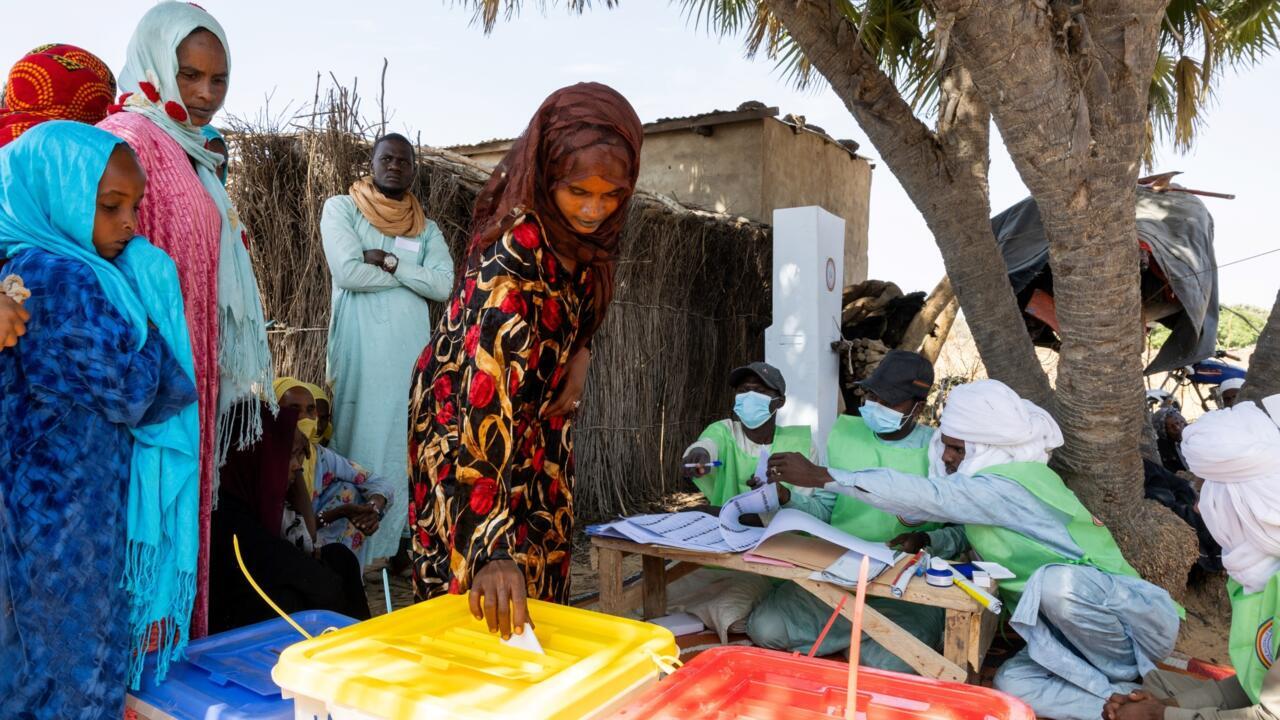
After three years of military-led governance, Chad is preparing to hold its first significant elections under the transitional leadership. These elections will determine the future of the country, following the sudden death of longtime leader Idriss Déby Itno, who was killed while fighting rebels in April 2021. The country’s transition to democracy has been a complex process, involving reforms and promises of elections that have been delayed several times. However, with the elections finally taking place, all eyes are on Chad’s political future.
Background: The Rise of Military Rule
In April 2021, Chad faced a seismic political shift when President Idriss Déby Itno was killed on the frontlines while fighting rebels. His death ended his 30-year rule and thrust the country into uncertainty. Following Déby’s death, his son, Mahamat Idriss Déby, assumed power, taking control of the country’s military junta.
The military, which took over after the president’s death, promised to hold democratic elections within 18 months. However, due to a mix of security concerns and internal pressures, the timeline for these elections kept getting extended. It was only after several years of negotiations and international pressure that the military junta finally committed to holding free and fair elections.
The Transition Process and Challenges
Chad’s transition from military rule to democracy has been fraught with challenges. Among the key issues were the suspension of opposition parties, the arrest of political activists, and ongoing security threats posed by rebel factions. Additionally, Chad’s involvement in regional security issues, particularly in the Sahel region, added another layer of complexity to the transition process.
The military-led government has faced constant scrutiny from the international community, particularly from the African Union (AU) and France. Both have called for a peaceful transition of power, urging the junta to respect the rights of Chadians and provide for free, transparent elections.
Upcoming Elections: The Triple Vote
The elections that will take place in Chad are expected to be historic. There will be three separate votes:
- Presidential Elections
- Parliamentary Elections
- Local Elections
Each of these elections will be held on the same day, marking an important turning point in Chad’s political landscape. The last presidential election in Chad was held in 2021, but due to the military takeover, it was effectively nullified. For the upcoming elections, candidates from across the political spectrum will be vying for various positions.
1. Presidential Election
The presidential election is the most closely watched vote. Mahamat Idriss Déby, the current leader of the country, will be seeking to officially confirm his rule through a democratic process. However, his leadership has been heavily criticized by opposition parties, who accuse him of using his position to consolidate power. In this election, the voters of Chad will decide whether the country will continue under military rule or transition to a new, democratic governance system.
Key Presidential Candidates
| Candidate Name | Political Party/Group | Key Focus Areas |
|---|---|---|
| Mahamat Idriss Déby | Military-led government | Continuation of security policies, stability |
| Saleh Kebzabo | Opposition parties | Democratisation, human rights |
| Ngarlejy Yorongar | Opposition parties | Opposition to military rule, reforms in governance |
2. Parliamentary Elections
Alongside the presidential election, Chad will also hold parliamentary elections to determine the future legislative body. The parliamentary vote will play a significant role in shaping the balance of power between the military and civilian political forces in the country. It will determine whether the government will have a strong mandate from the public or face a divided legislature.
Political Party Influence in Parliamentary Elections
| Political Party | Stance on Military Rule | Number of Expected Seats |
|---|---|---|
| National Union for Democracy | Opposes military rule | 15 |
| Chad’s Democratic Bloc | Supports peaceful transition | 10 |
| Democratic Forces of Chad | Against military dominance | 8 |
3. Local Elections
In addition to national and parliamentary votes, local elections will be held, allowing voters to elect local officials who will govern their respective regions. Local elections are seen as crucial for ensuring that Chad’s decentralization process continues and that the government remains responsive to the needs of local communities. The local elections will be especially important in areas affected by conflict and instability.
The Role of International Observers
International observers will play a crucial role in ensuring the integrity of the elections. Organizations such as the African Union (AU) and the European Union (EU) have already dispatched teams to Chad to monitor the election process. Their presence is expected to ensure that the election results are fair, transparent, and reflective of the will of the people.
International observers will primarily focus on:
- Ensuring voter registration and access to polling stations.
- Observing the conduct of the election day and the counting process.
- Reporting on any irregularities or violations of electoral laws.
Given Chad’s recent history of political unrest, the presence of international observers will help legitimize the election process and provide valuable oversight.
Security Concerns and Rebel Movements
Chad has faced significant security challenges in recent years, with rebel movements threatening the stability of the country. These rebel groups, often operating in the border regions, have clashed with the military in the past. As the elections approach, these groups may intensify their efforts to disrupt the process.
The government has pledged to increase security and ensure the safety of voters and polling stations. However, experts warn that violence could occur, especially in regions that are far from the capital, N’Djamena. Some rebels have already expressed their opposition to the elections, calling them a “sham” orchestrated by the military regime.
The Future of Chad’s Democracy
Chad’s upcoming elections are a critical moment for the country’s future. If the elections are successful, they could mark the beginning of a new democratic era for the country. However, if the elections are marred by violence or irregularities, it could deepen the political and social divisions within Chad and further alienate the population from the government.
The international community has emphasized the importance of free and fair elections, urging the military-led government to uphold its promises of democratic reforms. It remains to be seen whether Chad can overcome its history of authoritarian rule and embrace a truly democratic future.
Conclusion: A Pivotal Moment for Chad
Chad’s elections are an important milestone for the nation’s political trajectory. After years of military rule, the country is at a crossroads, with the possibility of a peaceful transition to democracy hanging in the balance. As citizens head to the polls, the world will be watching closely to see if Chad can overcome its turbulent past and pave the way for a more democratic future.
The success of these elections will depend on the commitment of the Chadian people, the political will of all stakeholders, and the support of the international community. Only time will tell whether these elections will truly bring about the change that Chad desperately needs.