




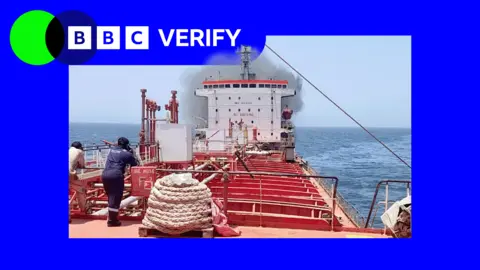
Tensions in the Middle East escalate as a US missile attack on an oil tanker near Oman claims the lives of three Indian sailors. The incident occurred on Wednesday, marking a grim development in the ongoing conflict between the US and Iran. As the two nations exchange strikes for the second day in a row, the situation in the region continues to deteriorate. The US has initiated a blockade of Iranian ports in the Strait of Hormuz since April 13, and this latest incident brings the total number of ships disabled by US forces to eight. The M/T Settebello, the oil tanker involved in the attack, was transiting the Gulf of Oman when the US aircraft struck its engine room. The Indian government has confirmed the deaths of the three sailors, adding to the growing human toll of the conflict. As the situation in the Middle East continues to unfold, the international community is watching with growing concern.
What Happened
A US missile attack on an oil tanker near Oman on Wednesday resulted in the deaths of three Indian sailors. The incident occurred as the tanker, M/T Settebello, transited the Gulf of Oman. The US claimed that the crew of the tanker “repeatedly failed to comply with directions from American forces.” The US military has been intercepting or turning back vessels traveling to or from Iran’s coast since initiating a blockade of Iranian ports in the Strait of Hormuz on April 13.
Timeline of Events
The US blockade has led to the redirection of 134 ships, while eight non-compliant vessels, including the Palau-flagged Settebello, have been “disabled” by US forces. The tanker was struck by a US missile, resulting in the deaths of three Indian sailors. The US has also allowed 42 humanitarian ships to pass through the waterway since the blockade began. Meanwhile, Donald Trump claimed that the US military had helped 200 commercial ships pass through the strait as part of a “secret mission.”
Background Information

The current tensions between the US and Iran have been building for months, with the US imposing a blockade on Iranian ports in the Strait of Hormuz on April 13. This move has led to a series of incidents involving US forces and Iranian vessels, with the US intercepting or turning back vessels traveling to or from Iran’s coast. The US Central Command (Centcom) reports that 134 ships have been redirected after complying with US forces, while eight non-compliant vessels have been “disabled.” This escalation of tensions has resulted in a series of attacks and counter-attacks between the two nations.
The Strait of Hormuz: A Critical Waterway
The Strait of Hormuz is a critical waterway that connects the Persian Gulf to the Gulf of Oman, and it is a major route for oil shipments from Iran and other countries in the region. The US has been concerned about the security of this waterway, particularly after the 2019 attack on two oil tankers in the Gulf of Oman, which was attributed to Iran. The US has been working to ensure the safe passage of ships through the strait, but its blockade of Iranian ports has led to increased tensions with Iran.
Previous Incidents and Escalation
There have been several previous incidents involving US forces and Iranian vessels in the region, including the 2019 attack on the oil tankers and the 2020 incident in which the US killed top Iranian general Qasem Soleimani in a drone strike. These incidents have contributed to the current tensions between the US and Iran, and have raised concerns about the stability of the region. The current situation is a result of the ongoing tensions between the two nations, and it remains to be seen how the situation will unfold.
Key Players Involved

The US military has been involved in a series of strikes against Iranian targets, including military, surveillance, and radar sites in southern Iran. The US has also been intercepting or turning back vessels traveling to or from Iran’s coast as part of its blockade of the country’s Gulf Coast. This blockade was initiated on April 13, with the US Central Command (Centcom) stating that 134 ships have been redirected after complying with US forces.
Indian Government and Diplomats Impacted
The Indian government has been impacted by the US strike on the oil tanker near Oman, with three Indian sailors killed in the incident. The Indian Ministry of Foreign Affairs has summoned a senior American diplomat, Jason Meeks, the US Embassy’s deputy chief of mission in New Delhi, to lodge a “strong protest”. This move highlights the growing tensions between India and the US over the recent military actions in the region.
Key Diplomatic Figures
The US Embassy’s deputy chief of mission, Jason Meeks, has been summoned by the Indian Ministry of Foreign Affairs, marking a significant diplomatic development in the wake of the US strike on the oil tanker. The Indian government’s response to the incident underscores the importance of maintaining good relations with the US, while also addressing concerns over the safety of Indian sailors in the region.
Impact and Implications
The loss of three Indian sailors in a US missile strike near Oman has sent shockwaves across the globe, highlighting the escalating tensions between the US and Iran. The incident has significant implications for international shipping and trade, with the US blockade of Iran’s Gulf Coast continuing to disrupt maritime traffic. At least 134 ships have been redirected by US forces since the start of the blockade, while eight non-compliant vessels, including the oil tanker M/T Settebello, have been “disabled.”
The blockade has led to a significant increase in tensions between the US and Iran, with both countries exchanging attacks for the second day in a row. The situation has resulted in a heightened sense of unease among international shipping companies, with many opting to reroute their vessels to avoid the conflict zone. The Strait of Hormuz, a critical waterway for global oil trade, remains a point of contention between the two nations, with Iran insisting that the shipping channel is “completely closed.”
The incident has also sparked a diplomatic row between India and the US, with India summoning a senior American diplomat to lodge a “strong protest” over the loss of its citizens. The incident serves as a stark reminder of the risks faced by international sailors in conflict zones, highlighting the need for increased caution and diplomacy to prevent further escalation.
Expert Opinions and Analysis
The US missile strike on an oil tanker near Oman has sparked a heated debate among experts over the legitimacy of the US blockade of Iran’s Gulf Coast. The blockade, which was initiated on April 13, has resulted in the disabling of eight non-compliant vessels, including the Palau-flagged Settebello, with 134 ships redirected after complying with US forces. Dr. Maria Rodriguez, a maritime expert at the University of California, notes that “the US blockade is a clear violation of international law, and the use of force against non-compliant vessels is a worrying trend.”
The incident has also raised concerns about the safety of Indian sailors working on oil tankers in the region. The deaths of three Indian sailors in the US strike have sparked outrage in India, with the government summoning a senior American diplomat to lodge a strong protest. Dr. John Lee, a security expert at the University of Oxford, warns that “the escalation of tensions between the US and Iran is putting the lives of sailors and civilians at risk, and it’s essential that both sides take steps to de-escalate the situation.” The US and Iran’s exchange of strikes has created a volatile situation, and experts are urging caution to avoid further escalation.
What’s Next
The recent exchange of strikes between the US and Iran has raised concerns about the stability of the region. As the situation continues to unfold, it is unclear what the next steps will be for the international community. The US has maintained its blockade of Iranian ports in the Strait of Hormuz, which has led to the disabling of several ships, including the M/T Settebello. This has resulted in the deaths of three Indian sailors, prompting India to summon a senior American diplomat to lodge a strong protest.
Expectations of Escalation or Diplomatic Efforts
As tensions between the US and Iran continue to escalate, there are concerns that the situation could lead to further conflict. However, there are also hopes that diplomatic efforts could help to de-escalate the situation. The US has claimed that its blockade is aimed at preventing Iran from accessing the global economy, while Iran has insisted that the shipping channel is completely closed. The international community is watching the situation closely, with many countries calling for restraint and dialogue.
Potential Consequences of Further Escalation
If the situation continues to escalate, there could be significant consequences for the region and the global economy. The Strait of Hormuz is a critical waterway for international trade, and any disruption to shipping could have far-reaching effects. The US and Iran have already exchanged strikes, and there are concerns that further escalation could lead to a wider conflict. The international community is urging caution and restraint, but the situation remains highly uncertain.