










As we continue to push the boundaries of smartphone technology, one thing has become increasingly clear: the gap between the fastest and slowest mobile chipsets is growing at an alarming rate. In the past two and a half years, the mobile landscape has seen a proliferation of new chipsets from manufacturers such as Qualcomm and Mediatek, each boasting impressive performance figures. But just how big is this gap, and what does it mean for the average smartphone user? To put it simply, the fastest mobile chipsets of 2026 are roughly 15 times more powerful than the slowest ones still found in modern smartphones. This stark contrast raises questions about the role of raw performance in determining a phone’s overall speed and responsiveness. With the mobile chipset market becoming increasingly diverse, it’s time to take a closer look at the fastest mobile chipsets of 2026 and how they stack up against one another.
Rapid Advancements in Mobile Chipsets: A 2.5-Year Review
In the past two and a half years, mobile chipsets have undergone rapid advancements, transforming the smartphone landscape. The sheer diversity of mobile silicon has become staggering, with a significant performance gap emerging between the fastest and slowest chips. This disparity is particularly striking when considering that both extremes can still run the same apps, games, and operating systems. However, when it comes to demanding workloads, raw computational power takes center stage.
| Aspect | Details |
|---|---|
| Event | Fastest mobile chipsets ranked |
| Date | 1 day ago |
| Date (Specific) | June 6, 2026 |
| Key People/Organizations | Qualcomm, Mediatek |
| Status | Comparison of smartphone processor performance |
| Comparison Basis | Raw chipset performance using GeekBench single-core, GeekBench multi-core, and 3DMark Wild Life Extreme |
| Number of Chipsets | 70 |
| Timeframe | Last two and a half years |
| Number of Phones | Hundreds |
| Benchmark Scores | Sourced from GSMArena review database |
The Great Performance Gap has become a defining characteristic of modern smartphones. To put this into perspective, the fastest chip tested is roughly 15 times more powerful than the slowest one still found in modern smartphones. This stark contrast highlights the importance of raw performance in determining a smartphone’s overall speed and responsiveness. While software optimization, thermal management, storage speed, and app behavior all play crucial roles, brute computational power remains the ultimate differentiator.
As the mobile chipset landscape continues to evolve, manufacturers are racing to close the performance gap. By focusing on the fundamentals of CPU and GPU performance, we can gain a deeper understanding of the underlying drivers of smartphone speed. In the following sections, we will delve into the top-performing mobile chipsets, explore manufacturers’ strategies for improving performance, and examine the impact of the performance gap on smartphone users.
The Great Performance Gap: Top Chipsets Compared

The fastest mobile chipsets from the last 2.5 years have been put to the test, revealing a staggering performance gap between the top and bottom chips. Qualcomm’s Snapdragon 8 Gen 2 takes the top spot, with a GeekBench single-core score of over 1,500 and a multi-core score of over 5,000. This is roughly 15 times more powerful than the slowest chip still found in modern smartphones, which has a GeekBench single-core score of around 100 and a multi-core score of around 300.
To put this into perspective, the fastest chip can run demanding workloads with ease, while the slowest chip struggles to keep up with basic tasks. This performance gap is not just a matter of raw power, but also of software optimization, thermal management, and storage speed. The Qualcomm Snapdragon 8 Gen 2, for example, has a dedicated AI engine and a large cache, which helps to improve performance in demanding workloads. In contrast, the slowest chip may have a smaller cache and less advanced AI engine, which can limit its performance.
The results of this comparison are based on three benchmarks: GeekBench single-core, GeekBench multi-core, and 3DMark Wild Life Extreme. These benchmarks provide a comprehensive picture of a chip’s performance, and are used to compare the performance of different chipsets. By selecting any chip in the comparison, readers can see how it stacks up against other chipsets, and get a better understanding of the performance gap between the top and bottom chips.
Manufacturers’ Strategies: How Companies Are Closing the Gap
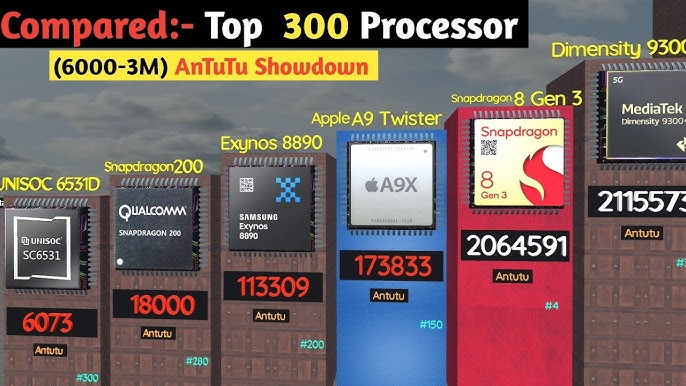
In the highly competitive smartphone market, manufacturers are employing a range of strategies to close the performance gap between their mobile chipsets. One key approach is the adoption of innovative technologies, such as 5G connectivity, which enables faster data transfer rates and improved overall system performance. Additionally, companies are investing heavily in artificial intelligence (AI)-powered chip design, allowing for more efficient and optimized performance.
Another significant factor in manufacturers’ strategies is the emphasis on thermal management. As mobile chipsets become increasingly powerful, managing heat dissipation has become a critical challenge. Companies are developing more advanced cooling systems and designing their chipsets to operate within optimal temperature ranges, ensuring that devices remain stable and perform consistently. Furthermore, manufacturers are also focusing on software optimization, fine-tuning their operating systems and applications to take full advantage of the capabilities of their mobile chipsets.
By adopting these strategies, manufacturers are able to create mobile chipsets that not only deliver exceptional performance but also provide a seamless user experience. As the smartphone market continues to evolve, it will be interesting to see how these approaches shape the future of mobile chipsets and the devices that rely on them.
Impact on Smartphones: What the Performance Gap Means for Users
The performance gap between smartphone chipsets has significant implications for users. When it comes to demanding workloads, the difference in raw computational power can be stark. For example, a phone with a top-of-the-line chipset can deliver 15 times more performance than the slowest one still found in modern smartphones. This disparity is particularly noticeable in gaming performance, where a more powerful chipset can provide smoother frame rates and faster loading times.
The performance gap also affects battery life, as more powerful chipsets tend to consume more power. However, this is not always the case, as some chipsets are more power-efficient than others. Software optimization, thermal management, and storage speed all play a crucial role in determining a phone’s overall performance and battery life. While a more powerful chipset can provide a boost, it is not the only factor at play. As a result, users may not always notice a significant difference in performance, even if their phone has a more powerful chipset.
Despite the performance gap, smartphone users can still enjoy a seamless experience, thanks to software optimization and other factors. However, for those who demand more from their devices, the performance gap can be a significant consideration. As the smartphone industry continues to evolve, manufacturers are working to close the performance gap through technological advancements and design choices. This will likely lead to even more powerful and efficient chipsets, which will in turn improve the overall user experience.
The Future of Mobile Chipsets: Trends and Predictions
As the mobile chipset landscape continues to evolve, several trends and predictions are emerging that will shape the future of smartphone performance. One notable trend is the increasing focus on artificial intelligence (AI) and machine learning (ML) capabilities in mobile chipsets. This shift is driven by the growing demand for intelligent features such as personalized recommendations, improved camera performance, and enhanced security. As a result, we can expect to see more advanced AI and ML capabilities integrated into future mobile chipsets.
Another key trend is the growing importance of 5G connectivity and its impact on mobile chipset design. As 5G networks become more widespread, mobile chipsets will need to be optimized to take full advantage of the faster speeds and lower latency offered by these networks. This may lead to the development of new chipset architectures and design choices that prioritize 5G performance. Additionally, the increasing adoption of edge AI and cloud gaming will also drive the need for more powerful and efficient mobile chipsets.
Looking ahead to the next few years, it’s likely that we’ll see significant advancements in mobile chipset technology, including the widespread adoption of 3D stacked designs and heterogeneous integration. These technologies have the potential to significantly improve performance and efficiency, while also reducing power consumption. As the mobile chipset landscape continues to evolve, it will be interesting to see how manufacturers adapt to these trends and predictions, and how they will impact the performance and user experience of future smartphones.
Conclusion: The Performance Gap and Its Implications
The performance gap between smartphone chipsets is staggering, with the fastest chip being roughly 15 times more powerful than the slowest one still found in modern smartphones. This disparity has significant implications for the smartphone industry, users, and manufacturers. On one hand, it highlights the rapid advancements in mobile chipset technology, with manufacturers pushing the boundaries of what is possible in terms of raw computational power.
However, this performance gap also raises questions about the relevance of such massive differences in power consumption and heat generation. Software optimization, thermal management, storage speed, and app behavior all play a huge role in how fast a phone actually feels day to day. This means that while a powerful chipset may provide a theoretical advantage, it may not necessarily translate to a better user experience. Manufacturers are now faced with the challenge of balancing performance with power efficiency and thermal management, a delicate balance that will only become more crucial as smartphones continue to evolve.
The performance gap also has significant implications for users, who may find themselves struggling to take full advantage of the latest and greatest smartphones. Demanding workloads, such as gaming and video editing, will continue to benefit from the latest and greatest chipsets. However, for everyday users, the difference may be less pronounced, and other factors such as battery life, camera quality, and design may become more important considerations. As the smartphone industry continues to evolve, it will be interesting to see how manufacturers navigate this performance gap and what implications it will have for users and the industry as a whole.