










In the ever-evolving world of mobile technology, one trend has become increasingly apparent: the gap between smartphone processor performance has grown at an alarming rate. Over the past two and a half years, the fastest mobile chipsets have left their slower counterparts in the dust, with some devices boasting speeds that are 15 times more powerful than their sluggish counterparts. This divergence in performance is not just a matter of raw processing power, but also reflects the complex interplay between software optimization, thermal management, and storage speed. As we delve into the world of mobile silicon, it becomes clear that the fastest mobile chipsets are not just faster, but also more refined, with a level of sophistication that is unmatched in modern smartphones.
The Growing Performance Gap: A Historical Context
In recent years, the gap between smartphone chipsets has grown exponentially. The fastest chipsets available today are roughly 15 times more powerful than the slowest ones still found in modern smartphones. This disparity is staggering, especially considering that both types of chipsets can run the same apps, games, and operating systems. The rapid advancement of mobile silicon has led to a highly diverse market, with various manufacturers offering a wide range of chipsets catering to different budgets and performance requirements.
| Aspect | Details |
|---|---|
| Event | Fastest mobile chipsets ranked and compared |
| Date | 1 day ago |
| Key People/Organizations | Qualcomm, Mediatek |
| Status | Current |
| Comparison Method | GeekBench single-core, GeekBench multi-core, 3DMark Wild Life Extreme benchmarks |
| Number of Chipsets | 70 |
| Timeframe | Last two and a half years |
| Filter Options | Popular, Full list |
Historical Context
To put this growth into perspective, the performance gap between smartphone chipsets has been increasing steadily over the past two and a half years. The rapid advancements in mobile technology have made it possible for manufacturers to develop more powerful and efficient chipsets. However, this has also led to a situation where some chipsets are significantly more powerful than others, making it challenging for consumers to choose a device that meets their performance needs.
Benchmarking the Gap
To better understand the performance gap, benchmarking scores from various devices have been analyzed. The results show a significant difference in performance between the fastest and slowest chipsets. This disparity is not just about raw computational power but also about software optimization, thermal management, storage speed, and app behavior, which all contribute to the overall performance of a smartphone.
Chipset Comparison: The Top Contenders

The world of mobile chipsets has become increasingly diverse, with a significant performance gap between the fastest and slowest chips. This gap is staggering, with the fastest chip being roughly 15 times more powerful than the slowest one still found in modern smartphones. While raw performance isn’t everything, it plays a crucial role in demanding workloads. To strip things down to the fundamentals, we’ve focused on three benchmarks: GeekBench single-core, GeekBench multi-core, and 3DMark Wild Life Extreme.
These benchmarks provide a clear picture of chipset performance, with 70 smartphone chips from the last two and a half years included in the comparison. The results are sourced from device reviews, with median scores used where multiple devices with the same chipset were tested. To make the charts easier to read, a dynamic 100% baseline system is used, allowing users to select any chip and view all others relative to it. This provides a clear and concise way to compare chipset performance.
Market Impact: How the Gap Affects Consumers
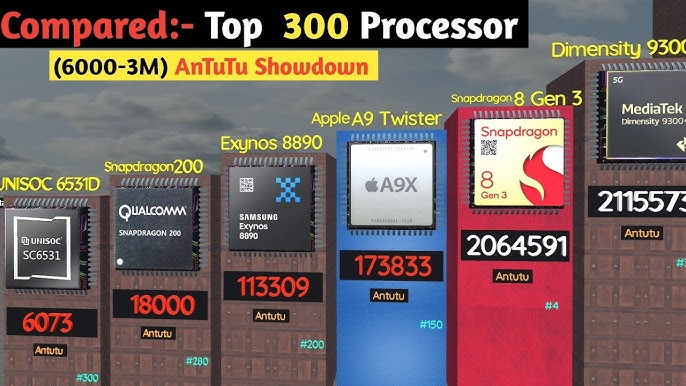
The significant gap in smartphone chipsets has a profound impact on consumers. The disparity in performance between the fastest and slowest chips is staggering, with the former being roughly 15 times more powerful than the latter. This variation in raw computational power affects how users experience their devices, particularly when running demanding workloads. While software optimization, thermal management, and storage speed also play crucial roles in determining a phone’s overall speed, brute computational power remains a key factor.
As a result, consumers are faced with a complex landscape of mobile chipsets, each with its unique strengths and weaknesses. The sheer diversity of mobile silicon can be overwhelming, making it challenging for users to choose the right device for their needs. The performance gap has a direct impact on consumer purchasing decisions, with many opting for higher-end devices that offer superior performance. However, this also means that budget-conscious consumers may be left with slower devices that struggle to keep up with demanding tasks.
The growing performance gap has significant implications for the mobile industry as a whole. As consumers become increasingly aware of the differences in chipset performance, manufacturers must adapt to meet their evolving needs. This may lead to a shift towards more affordable, high-performance devices, or a greater emphasis on software optimization to bridge the gap between different chipsets. Whatever the outcome, one thing is clear: the performance gap is a pressing issue that will continue to shape the mobile landscape in the years to come.
Expert Analysis: What the Future Holds
The rapid advancement of mobile technology has led to a staggering diversity in smartphone chipsets. In 2026, the fastest mobile chipsets are roughly 15 times more powerful than the slowest ones still found in modern smartphones. This significant performance gap highlights the complexity of mobile silicon, which is influenced by various factors beyond raw computational power. Software optimization, thermal management, storage speed, and app behavior all contribute to a phone’s overall performance.
The Importance of Raw Performance
While raw performance isn’t the only factor determining a phone’s speed, it remains a crucial aspect, particularly when dealing with demanding workloads. In such situations, brute computational power is still the most effective solution. To better understand this concept, we’ve isolated the raw chipset performance of 70 smartphone chips from the last two and a half years, using three benchmarks from our review database: GeekBench single-core, GeekBench multi-core, and 3DMark Wild Life Extreme. By focusing on these fundamental aspects, we can gain a clearer understanding of the underlying performance differences between various chipsets.
A Dynamic Baseline System
To facilitate easier comparison, our tool employs a dynamic 100% baseline system. This allows users to select any chip and view all others relative to it, making it easier to visualize the performance differences between various chipsets. By default, the “Popular” filter is enabled, showcasing the 30 most-viewed chips in our database based on recent reader interest. However, users can disable this filter to browse the full list of chipsets, providing a comprehensive overview of the current mobile chipset landscape.
Conclusion: The Implications of the Performance Gap
The performance gap between smartphone chipsets has reached absurd levels, with the fastest chip being roughly 15 times more powerful than the slowest one still found in modern smartphones. This disparity raises questions about the implications of such a significant performance gap. While software optimization, thermal management, storage speed, and app behavior all play a role in how fast a phone feels day-to-day, raw computational power remains a crucial factor in demanding workloads.
The comparison of chipset performance highlights the need for a more nuanced understanding of mobile performance. By focusing solely on CPU and GPU performance, the results reveal a stark contrast between the top performers and the slowest chips. 70 smartphone chips from the last two and a half years were tested, with median scores used where multiple devices with the same chipset were reviewed. This approach provides a comprehensive view of the performance landscape, allowing readers to compare the relative strengths of different chipsets.
The performance gap has significant implications for consumers, who may struggle to make informed purchasing decisions in the face of such a wide range of performance levels. As the mobile technology landscape continues to evolve, it is essential to understand the factors driving this gap and how they will shape the future of mobile chipsets.
Additional Resources: Further Reading and Comparison Tools
To further explore the fastest mobile chipsets, readers can access a comprehensive chipset comparison tool on the website. This tool allows users to compare the performance of various smartphone processors using three benchmarks: GeekBench single-core, GeekBench multi-core, and 3DMark Wild Life Extreme. The results are sourced from in-depth device reviews, with median scores used where multiple devices with the same chipset were tested.
The comparison tool also features a dynamic 100% baseline system, which makes it easier to read and understand the performance differences between various chipsets. Users can select any chip to view its performance relative to others, and also access the underlying benchmark numbers for each individual test. Additionally, the tool includes a “Popular” filter, which displays the 30 most-viewed chips in the database based on recent reader interest.
For those interested in exploring the full list of chipsets, the “Popular” filter can be disabled to browse the complete list. This resource provides a valuable insight into the performance capabilities of various smartphone processors, allowing readers to make informed decisions when choosing their next device.